A concrete floor in a warehouse, factory, workshop or shop has to cope with traffic, spills and frequent cleaning. Two systems often considered for these floors are epoxy and chlorinated rubber. Both can work well in the right conditions. They behave differently, and the best choice depends on how the floor is used and on the specific products.
The short version
| Property | Epoxy floor coating | Chlorinated rubber floor coating |
|---|---|---|
| Type | Two-pack: resin and hardener mixed on site | Single-pack, solvent-borne |
| How it hardens | Cures by chemical reaction | Dries as the solvent evaporates |
| Film | Hard, tough film; some systems are applied in thicker coats | Typically a thinner film per coat |
| Strengths | Durability under traffic; chemical resistance in many products | Quick drying; single-pack, so nothing to mix; maintenance recoating as the data sheet allows |
| Watch-outs | Mixing ratio and pot life; cure time before traffic; moisture in the slab can affect adhesion | Solvent-borne: needs ventilation and no ignition sources during application; check compatibility before overcoating with a different system |
| Typical uses | Warehouses, retail floors, workshops and production areas with heavy traffic | Floors needing quick return to service or simple periodic recoating, and some chemical-exposure areas |
Every row depends on the actual product. The manufacturer’s data sheet and chemical-resistance chart are the authority for any specific floor.
Epoxy floor coatings
An epoxy floor coating is supplied as two components, a resin and a hardener, which are mixed in the correct ratio just before application. Once mixed, the coating has a limited working time (its pot life) and then cures by chemical reaction into a hard, durable film.
Where epoxy suits: floors with heavy foot or vehicle traffic, retail floors that must stay easy to clean, and areas where the product’s chemical-resistance data matches the spills expected. Two-pack epoxy floor products are commonly described by their makers as having very good chemical resistance, but the details differ by product and by chemical.
What to plan for:
- Accurate mixing and timing. Part-mixed or out-of-date material does not cure properly.
- Cure time before use. The floor needs to stay closed until the coating has cured enough for traffic; the data sheet states the times.
- A dry, sound slab. Moisture coming up through the concrete can affect adhesion during application.
- Sunlight. Some epoxy coatings can discolour or chalk in direct sunlight, which matters near open doors or outdoors. Where it matters, the manufacturer may specify a suitable topcoat.
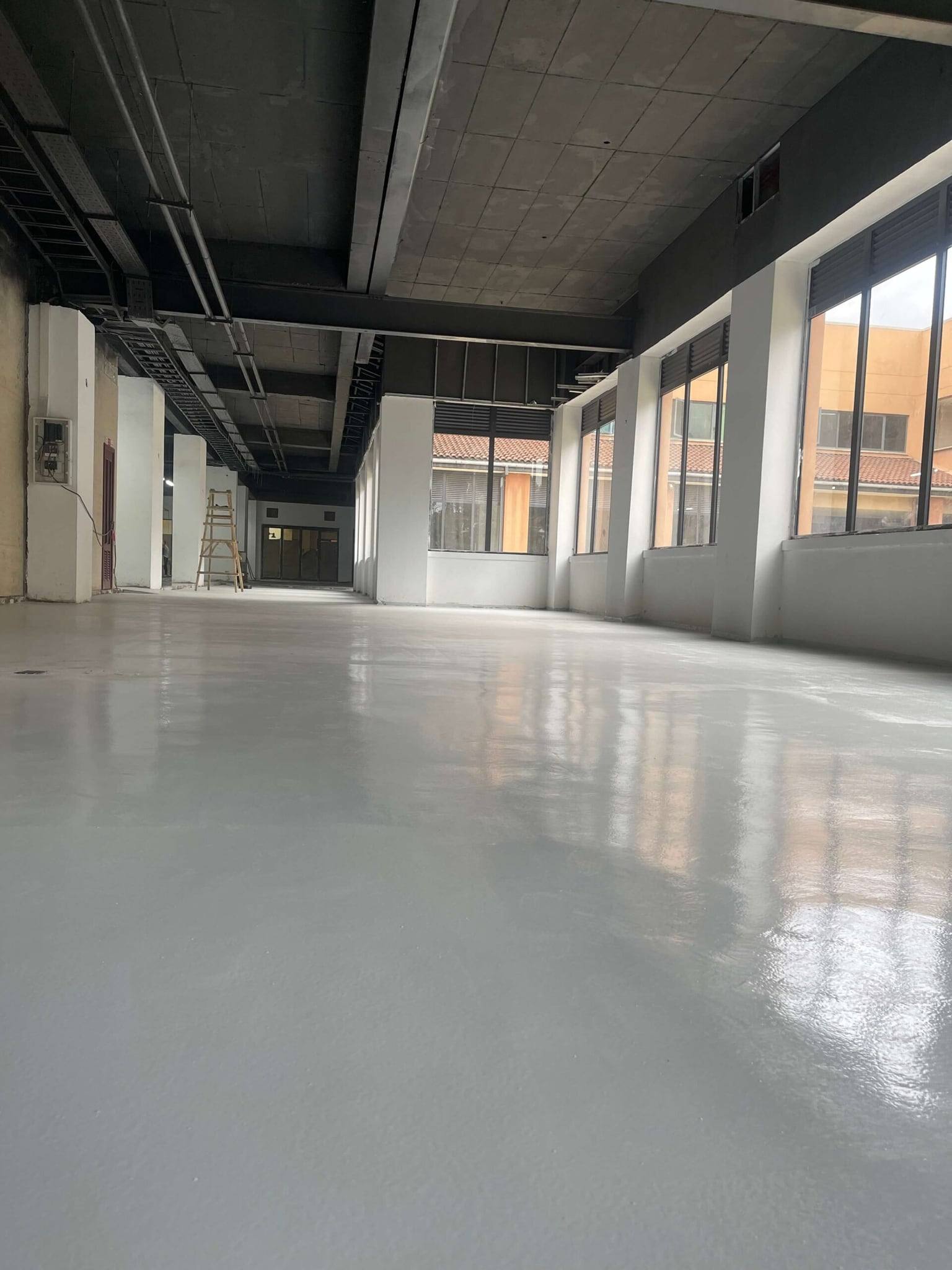
At the supermarket at Rosslyn Riviera Mall, an epoxy floor coating was applied after crack repair and floor levelling, for a hard-wearing floor suited to continuous retail use.
Chlorinated rubber floor coatings
Chlorinated rubber floor paint is a single-pack coating: there is nothing to mix, and it dries as the solvent evaporates. Suppliers describe it as fast-drying, with resistance to a range of chemicals, and as suitable for alkaline surfaces such as concrete floors.
Where chlorinated rubber suits: floors that need to be back in use quickly, floors that will be recoated periodically as part of maintenance, and some areas with chemical exposure that the product is rated for.
What to plan for:
- Ventilation and no ignition sources during application, because it is solvent-borne.
- Film build. Coats are thinner than many epoxy systems, so the number of coats matters.
- Future changes of system. Changing to a different system later may mean removing the existing coating. The new product’s data sheet states which existing coatings it can be applied over.
Why preparation matters more than the product
Many floor-coating problems trace back to the surface rather than the coating itself. Whatever the system, the floor is:
- Assessed for its condition, existing coatings, moisture, traffic and expected spills.
- Prepared mechanically, usually by floor grinding, to level the surface and remove contaminants and weak material.
- Repaired, with cracks and damaged areas made good.
- Primed with a suitable floor primer.
- Coated in the specified number of coats, then inspected for even coverage and finish.
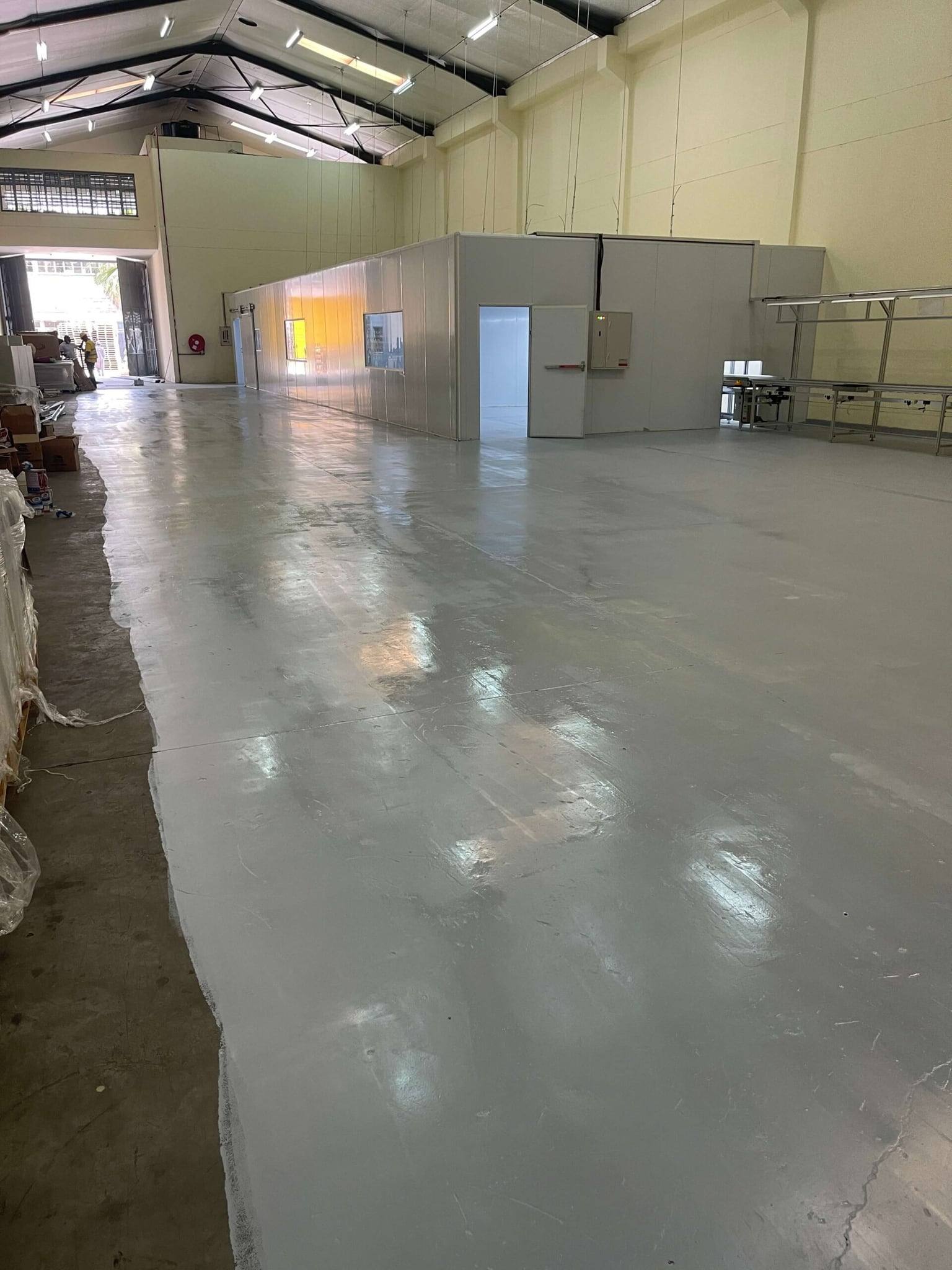
At the warehouse near JKIA, the uneven concrete was mechanically ground before a primer was applied. Epoxy and chlorinated rubber systems were then used in different areas of the facility, matched to how each area is used.
How to choose
Ask these questions about your floor:
- What traffic does it take? Foot traffic, trolleys, pallet trucks or forklifts.
- What could be spilled on it? List the actual chemicals, oils and cleaning products, and check them against the product’s resistance chart.
- How long can it be closed? Cure and return-to-service times differ between systems.
- How is it cleaned? Wet cleaning, scrubbing machines or pressure washing.
- Is it indoors, or exposed to sun and rain?
- What coating is on it now? Compatibility decides whether it can be overcoated or must be removed.
The answers narrow the choice. Sometimes different systems suit different areas of the same building, as at the JKIA warehouse.
Getting it right
A floor coating is only as good as the assessment, preparation and specification behind it. Our epoxy and industrial floor coatings service starts with an inspection of the floor and how it is used, and recommends a system from the manufacturer’s data for your conditions. For a written system that a contractor can follow, see what a good paint specification includes. Talk to us about your floor.
Sources
- Technical Paint Services, Chlorinated Rubber Floor Paint (product page) (accessed 5 November 2026)
- Witham Group, Floor paints (product range overview) (accessed 5 November 2026)
Product data sheets from the manufacturer take precedence over general guidance for any specific product.